 11
11
If you’ve noticed stubborn belly fat appearing after 40—even when your diet hasn’t changed much—you’re not alone. Many women experience the same frustrating shift in body shape during midlife.
The truth is, belly fat after 40 is not just about eating more or exercising less. It’s deeply connected to hormonal changes, muscle loss, stress levels, and metabolism shifts.
The good news? You can take control of it. And one of the most effective solutions is strength training (lifting weights).
In this article, you’ll learn why belly fat increases after 40 and exactly how lifting weights can help you reverse it.
Several biological and lifestyle factors combine to change how your body stores fat.
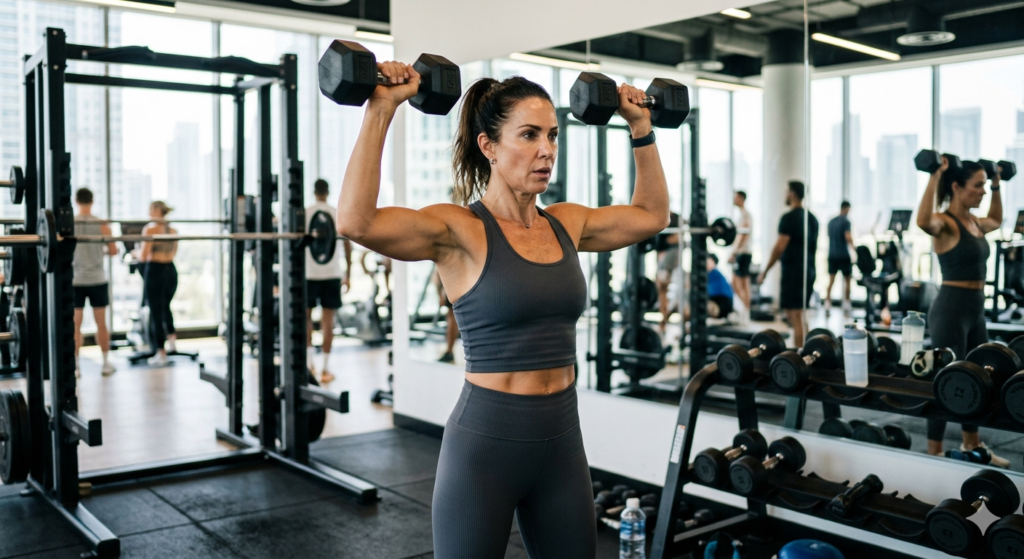
One of the biggest reasons for belly fat gain is declining estrogen levels during perimenopause and menopause.
This is why many women notice a “middle shift” in body shape after 40.
As you age, your metabolism naturally slows down due to:
Muscle is metabolically active tissue, meaning it burns calories even at rest. Less muscle = fewer calories burned daily.
After age 30, women gradually lose muscle mass. By 40+, this becomes more noticeable.
Without enough muscle, your body stores more energy as fat—especially around the belly.
Chronic stress leads to higher cortisol levels, which is strongly linked to belly fat.
Stress doesn’t just affect your mind—it directly impacts your waistline.
With age and hormonal changes, your body may become less efficient at processing sugar.
This leads to:
Belly fat is often the first place your body stores excess energy.

After 40, many women experience:
All of these contribute to fat accumulation around the abdomen.
Belly fat in midlife is not just “fat”—it’s hormonally driven fat.
That means:
You need a strategy that targets the root causes: muscle loss, metabolism, and hormones.
Strength training is one of the most powerful tools for reducing belly fat after 40.
Let’s break down exactly why it works.
\text{More Muscle} \; \rightarrow \; \text{Higher Resting Metabolic Rate} \; \rightarrow \; \text{More Calories Burned}}
When you lift weights, you build lean muscle. Muscle increases your resting calorie burn—even when you’re not exercising.
This helps:
Strength training increases calorie burn even after your workout ends.
Your body continues using energy to:
This is more effective for fat loss than steady cardio alone.
Lifting weights helps regulate key hormones:
When hormones are balanced, your body is less likely to store fat around the belly.
Strength training is a powerful stress reliever.
It helps:
Lower cortisol = less abdominal fat storage.
Lifting weights directly combats sarcopenia.
Benefits include:
More muscle means a stronger, leaner body.
Strength training helps your muscles use glucose more efficiently.
This leads to:
Unlike cardio, which mainly reduces weight, lifting changes body shape.
You get:
Even if the scale doesn’t move much, your body looks and feels different.
You can’t “spot reduce” fat, but you can strengthen your entire body and reduce overall fat percentage.
These exercises build muscle and improve metabolism.
Day 1: Full Body
Day 2: Rest or Walking
Day 3: Full Body
Day 4: Rest
Repeat weekly.
Supports muscle building:
Carbs help regulate hormones and energy.
Supports hormone health:
Helps metabolism and reduces bloating.
Cardio alone does not fix hormone-related belly fat.
Extreme dieting slows metabolism further.
Muscles need challenge to grow.
Results require regular training.
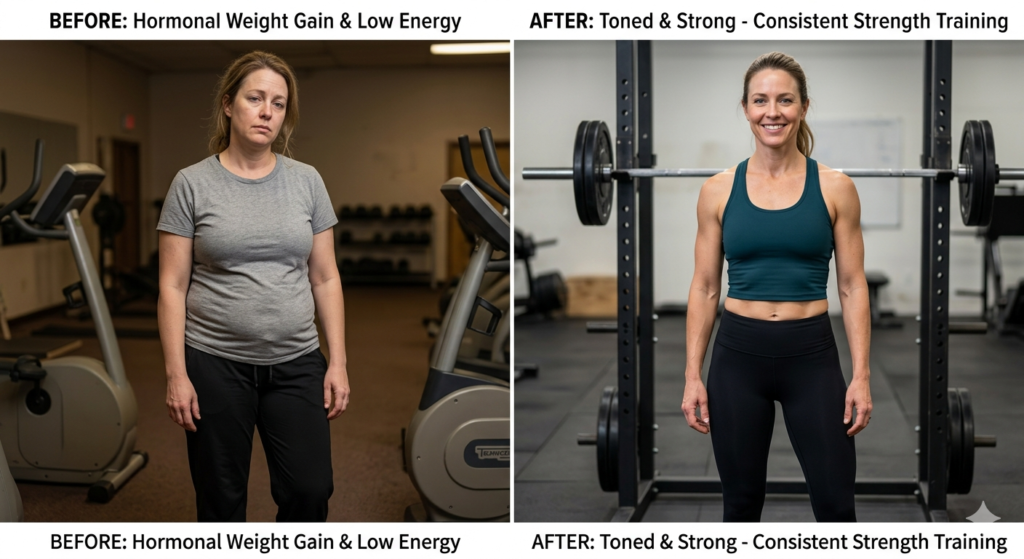
With consistent strength training:
Progress depends on consistency and nutrition.
Belly fat after 40 is not just about calories—it’s about hormones, muscle loss, and metabolism changes.
But the solution is powerful and simple: strength training.
Lifting weights helps you:
You don’t need extreme diets or endless cardio. You need a smart, consistent strength training routine.
Your body is not working against you—it just needs the right strategy.
Yes, it helps reduce overall fat and improves body composition significantly.
Strength training is more effective for long-term fat loss after 40.
2–4 times per week is ideal for most women.