 11
11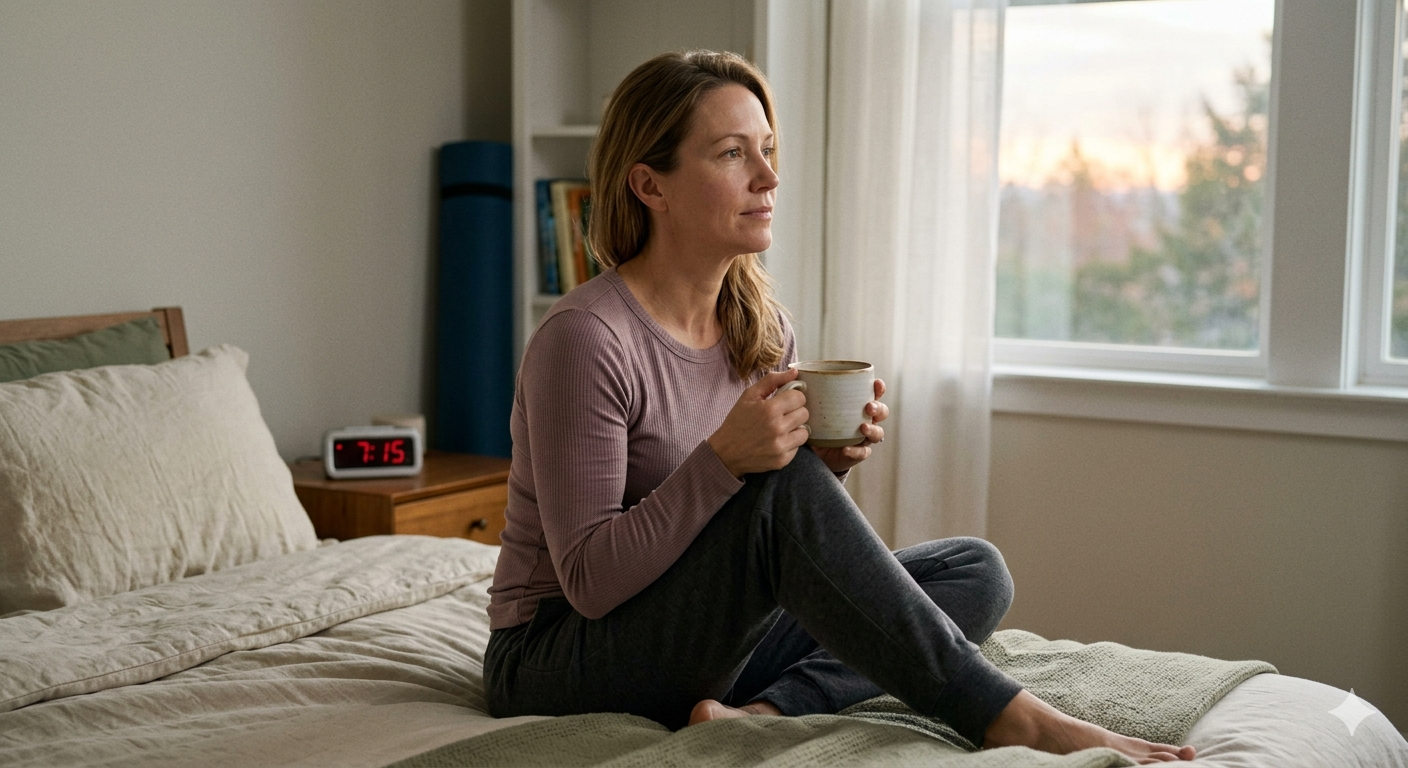
You wake up the day after a workout. Your legs feel like concrete. Your shoulders are stiff. Walking up stairs requires a silent pep talk. And you think to yourself: “I did the same workout at 35 and felt fine the next morning. What happened?”
Nothing is broken. You are not lazy. And you are definitely not “too old” to train hard.
Here is the reality: Recovery is not a sign of weakness after 40. It is the actual work.
The women who thrive in their forties, fifties, and beyond are not the ones who train the hardest. They are the ones who recover the smartest. Your body has changed, but that does not mean you have to live in a perpetual state of soreness. It means you need a new playbook.
This article explains exactly why recovery slows down after 40 and gives you seven science-backed strategies to speed it back up.
Let’s start with the honest biology. No fluff. No pseudo-science.
Estrogen is not just a “reproductive hormone.” It is a powerful anti-inflammatory and antioxidant. When estrogen levels begin to fluctuate and then drop during perimenopause and menopause, your body loses a key regulator of inflammation.
What that means for you: After a workout, your muscles swell with inflammatory cells to begin repair. With less estrogen, that inflammatory response becomes exaggerated and lasts longer. What used to be 24 hours of soreness becomes 72 hours.
Remember the “anabolic resistance” we discussed in earlier articles? It applies to recovery too. Your muscles become less sensitive to amino acids. That means after you eat protein, less of it actually gets used for muscle repair.
What that means for you: The same post-workout chicken breast that rebuilt your muscles at 30 is only half as effective at 45. You need more protein, timed more carefully, to achieve the same repair.
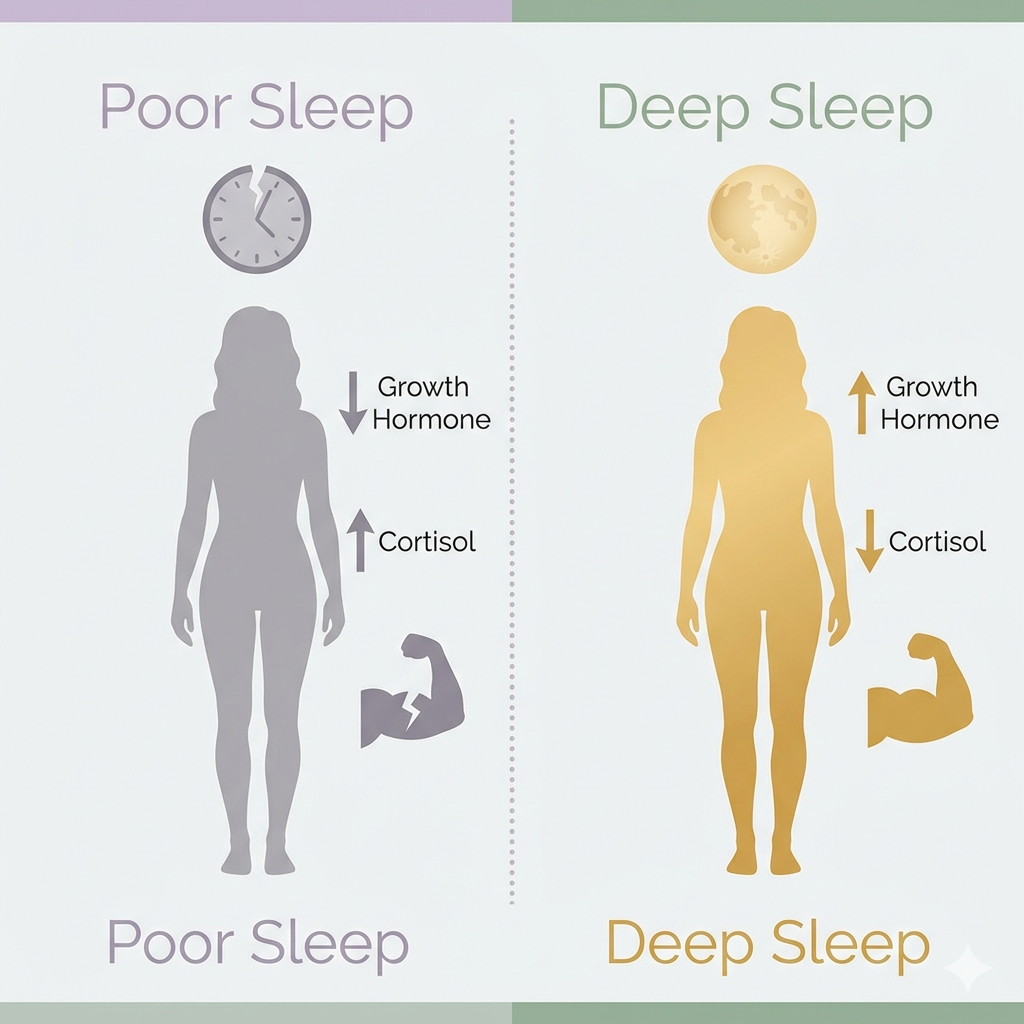
Growth hormone (GH) is your body’s natural repair signal. It spikes during deep sleep and after intense exercise. After 40, your baseline GH production drops by approximately 15% per decade.
What that means for you: Your nighttime repair crew has fewer workers. Sleep becomes more critical, but also more disrupted. It is a double hit.
Glycogen is the stored carbohydrate energy in your muscles. After a workout, your muscles need to refill those stores. After 40, the enzyme that drives glycogen synthesis (glycogen synthase) becomes less active.
What that means for you: Your muscles stay energetically “hungry” longer. That heavy, dead feeling in your legs the day after a workout? That is partially empty glycogen tanks.
Cortisol is your stress hormone. It is catabolic, meaning it breaks down tissue. Chronic life stress (work, kids, aging parents, financial pressure) keeps cortisol elevated. Add a tough workout, and your cortisol spikes even higher and stays elevated longer than it did in your thirties.
What that means for you: Your body is in a muscle-breaking state longer than it is in a muscle-building state. Recovery is literally fighting against your hormone profile.

Now for the good news. Every single one of these biological changes can be addressed. You are not a victim of aging. You are just playing a new game with new rules.
You already know you need more protein. But timing matters just as much.
The fix: Eat 30–40g of high-quality protein within 90 minutes of finishing your workout. Then eat another 20–30g of slow-digesting protein (like cottage cheese or casein shake) within an hour of bedtime.
Why it works: The post-workout dose stops muscle breakdown. The bedtime dose provides a slow drip of amino acids throughout the night, combating the natural overnight fast when repair normally stalls.
Best bedtime recovery protein: 1 cup cottage cheese or 1 scoop casein protein powder mixed with water or unsweetened almond milk.
You cannot out-train bad sleep after 40. It is biologically impossible. Deep sleep is when growth hormone is released. Without enough deep sleep, your muscles simply do not repair.
The fix: Aim for 7–9 hours. But more importantly, focus on quality. Create a wind-down routine 60 minutes before bed. No screens. Dim lights. Cool room temperature (65–67°F / 18–19°C).
The over-40 specific hack: If night sweats from perimenopause wake you up, invest in moisture-wicking pajamas and a cooling mattress topper. Sleep disruptions from temperature are not “in your head.”
Complete rest (sitting all day) actually slows recovery because it reduces blood flow to sore muscles. Blood carries oxygen and nutrients to damaged tissue. Stagnation starves the repair process.
The fix: On rest days, do 20–30 minutes of low-intensity movement. Think walking, light cycling, swimming, or yoga. Keep your heart rate below 120 BPM. You should be able to hold a conversation easily.
What counts: A 20-minute walk outside. Stretching for 10 minutes. Foam rolling while watching TV. Gentle movement, not another workout.
There is a lot of confusion about ice baths versus hot baths. Here is the simple rule after 40:
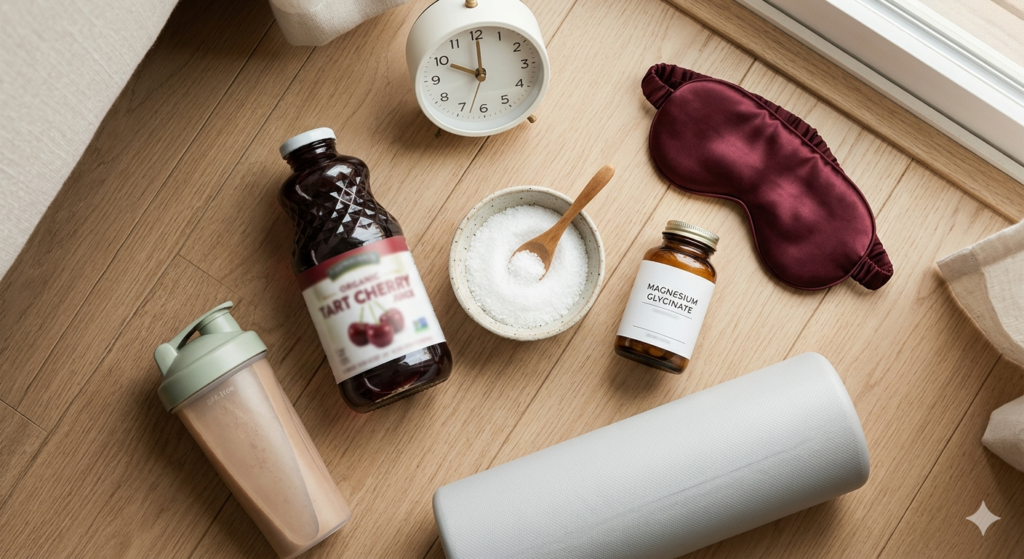
The fix: Do not sit in an ice bath for 20 minutes unless you are an elite athlete. For most women over 40, a warm Epsom salt bath the evening after a workout is more effective and far more pleasant. Magnesium from the Epsom salts also supports muscle relaxation.
By the time you feel thirsty after 40, you are already dehydrated. And plain water without electrolytes actually dilutes your remaining electrolytes, which can worsen muscle cramps and fatigue.
The fix: Drink half your body weight in ounces of water daily (e.g., 150 lbs = 75 oz). Add a pinch of sea salt and a squeeze of lemon to your post-workout water. Or use an electrolyte powder with sodium, potassium, and magnesium.
The over-40 specific hack: Magnesium glycinate (300–400mg) taken before bed improves both muscle recovery and sleep quality. Most women over 40 are magnesium deficient without knowing it.
Tart cherry juice is one of the most researched natural recovery aids for women over 40. Multiple peer-reviewed studies show it reduces muscle soreness, lowers inflammatory markers, and improves sleep duration.
The fix: Drink 8–10 oz of unsweetened tart cherry juice within 30 minutes after your workout. Or take 500mg of tart cherry extract if you want to avoid the sugar.
Why it works: Tart cherries contain anthocyanins, powerful antioxidants that block the same inflammatory pathways as ibuprofen but without the gut damage.
This is the toughest truth for driven women to accept. You grew up believing “no pain, no gain.” But after 40, more is not better. Smarter is better.
The fix: Take at least two full rest days from strength training per week. Take one full “active recovery week” every 6–8 weeks where you cut volume and intensity by 50%.
Signs you are overtraining after 40:
If any of these sound familiar, take three full days off. You will come back stronger, not weaker.
Let us walk through a realistic recovery day for a woman over 40 who trained hard the day before.
Morning (upon waking):
Breakfast:
Midday:
Afternoon snack:
Evening:
Before bed (60 minutes prior):
Result: By morning, your recovery will be noticeably accelerated. What used to take 72 hours now takes 24–36.

Sometimes slow recovery is not just aging. It could be a medical issue. See a healthcare provider if:
These are not normal aging. These are signals to get checked.
You are not 30 anymore. And thank goodness for that. You are wiser, more disciplined, and you know your body better than any fitness influencer ever could.
But wisdom also means adapting. The woman who wins after 40 is not the one who trains the hardest. It is the one who recovers the smartest.
Your new recovery manifesto:
You have decades of strong, capable years ahead of you. But only if you treat recovery as seriously as you treat your workouts.
Train hard. Recover harder. Thrive at every age.
Disclaimer: This article is for educational purposes only and does not constitute medical advice. Always consult a healthcare provider before starting a new exercise or recovery protocol, especially if you have underlying health conditions or are taking medications.