 11
11
If you are a woman over 40, you have likely noticed that your body doesn’t respond to diet and exercise the way it used to. That stubborn belly fat, the longer recovery after a hike, or the feeling of “softness” despite eating well can be frustrating.
Here is the good news: You are not broken, and you are not just “getting old.” You are likely experiencing a natural biological shift called sarcopenia (age-related muscle loss) and hormonal fluctuations, specifically a decline in estrogen.
The single most effective weapon against this shift? Protein.
But how much is actually enough? Not the standard recommended dietary allowance (RDA) that worked for you at 25, but the real number required to build muscle, torch fat, and feel strong in your forties and beyond.
Let’s break down the science, the strategy, and the simple math.
Before we get to the numbers, you need to understand the “why.” For women under 30, the body is an anabolic machine. It builds muscle easily. After 40, two things happen:
If you eat the standard RDA of 0.8 grams per kilogram of body weight (about 54g for a 150lb woman), you are eating a survival amount. That prevents deficiency, but it will never build muscle. To build muscle over 40, you need a therapeutic dose.
After reviewing current sports nutrition literature and studies on peri-menopausal women, the consensus is clear.
Women over 40 who want to build muscle should consume between 1.6 and 2.2 grams of protein per kilogram of body weight (or roughly 0.7 to 1.0 grams per pound).
Let’s do the math for a 150-pound (68 kg) woman:
The Sweet Spot: Aim for 1.8g per kg (0.8g per lb). For our 150lb woman, that is 120 grams of protein daily.
Why this specific range? It’s about a specific amino acid called Leucine. Leucine is the “light switch” for muscle building. To overcome anabolic resistance, you need roughly 2.5 to 3 grams of leucine per meal.
Research shows that spreading your protein across the day (rather than eating it all at dinner) maximizes muscle protein synthesis by 25%.
You cannot eat 120g of protein in one sitting (your body will just oxidize it for energy or store it as fat). You need to distribute it.
Here is a sample template for a 120g protein day:
Breakfast (30g Protein)
Lunch (35g Protein)
Dinner (35g Protein)
Snack (20g Protein)
Notice: Every meal is 30g+. This is critical. Snacks of 5g or 10g (like a handful of nuts) do not contain enough leucine to flip the “build muscle” switch for a woman over 40.
This is a hot topic. For women over 40, bioavailability matters.
The Verdict: You can absolutely build muscle on a plant-based diet, but you have to work harder. You will likely need to aim for the higher end of the range (2.2g/kg) and you must combine plant sources (e.g., rice + beans) or use a high-quality pea/rice protein blend powder to ensure you get that 3g leucine per meal.
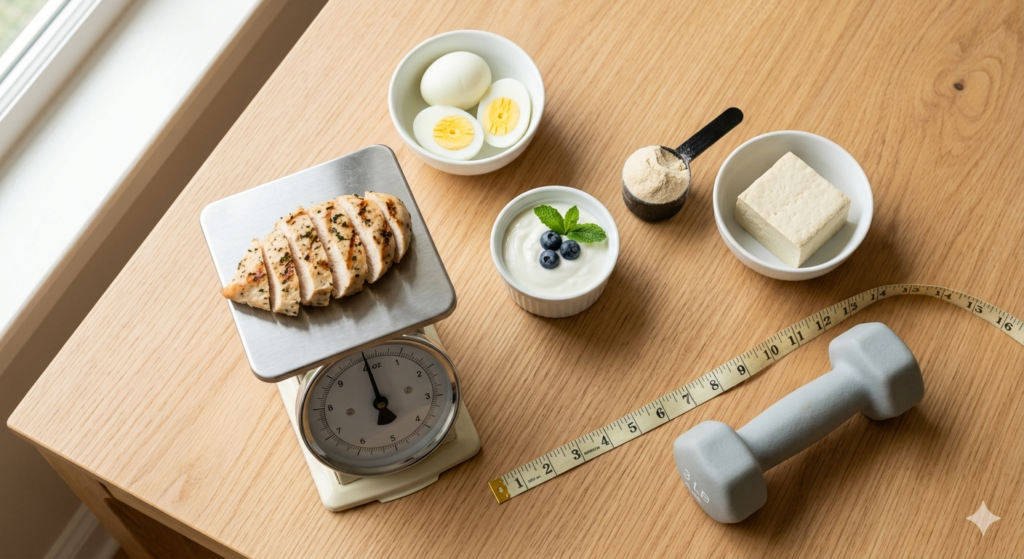
Protein without resistance training is like building a house without bricks. You will excrete the excess protein in your urine, and it won’t turn into muscle.
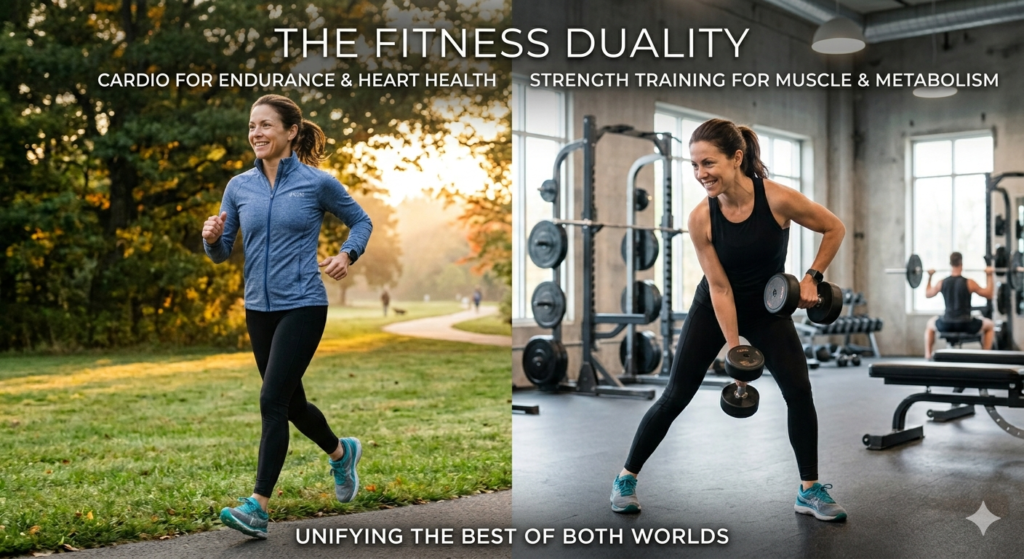
The Non-Negotiable Rule: To utilize 120g of protein for muscle growth, you must perform strength training at least 2–3 times per week.
Collagen is fantastic for joints, hair, and skin. However, it is low in tryptophan and leucine. It does not count toward your muscle-building total. Use collagen in addition to whey or plant protein, not instead of it.
While processed meats (bacon, salami) should be limited, lean red meat (sirloin, 90/10 ground beef) is rich in creatine and zinc—two nutrients menopausal women are often deficient in. Red meat, 1–2 times a week, is beneficial.
The numbers above (120g for 150lb) are for a moderately active woman lifting weights 3x a week.
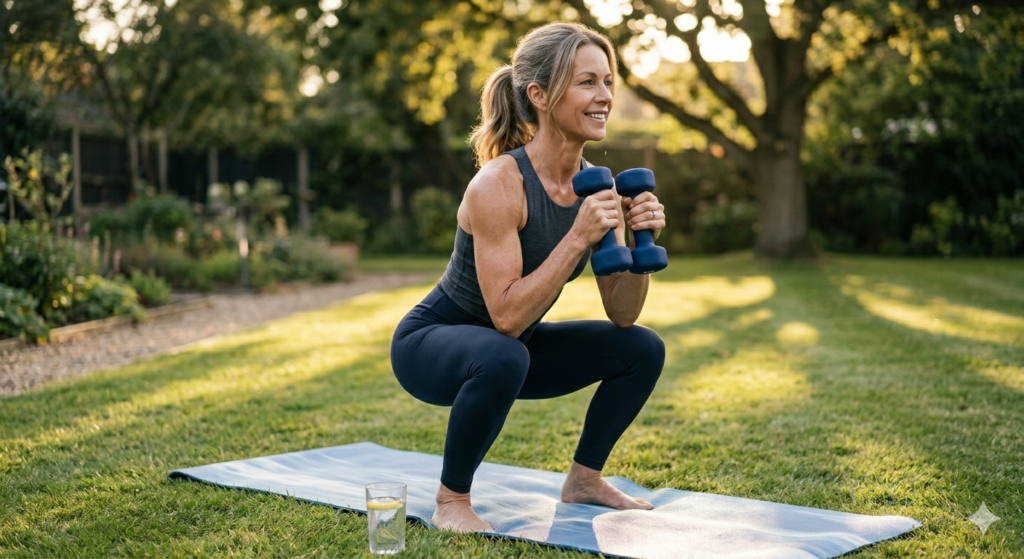
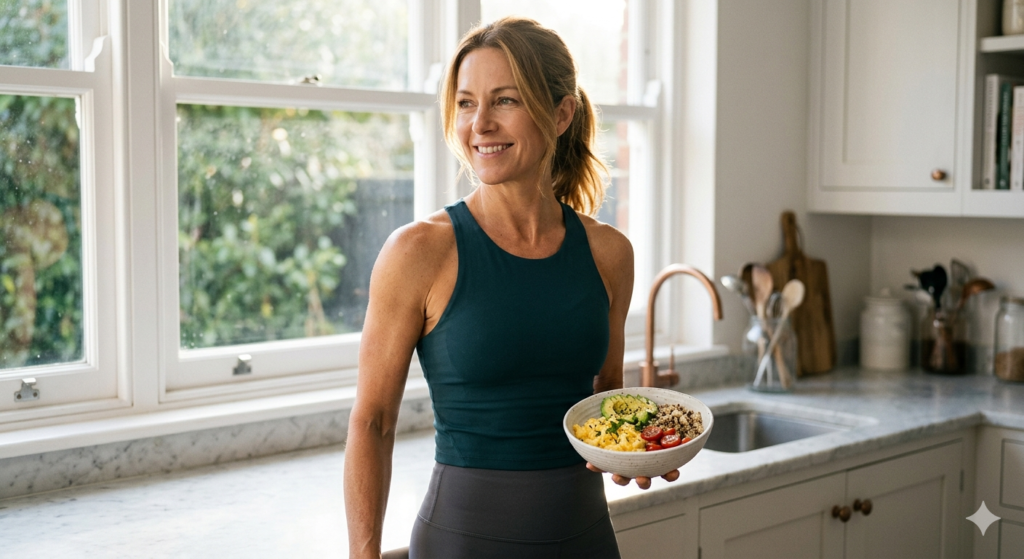
Let’s bring this to life. Here is a realistic, delicious day hitting 125g of protein without living on chicken breast and broccoli.
Daily Total: 124g.
For decades, women were told to fear protein because it was “fatty” or “hard on kidneys.” Unless you have pre-existing chronic kidney disease, this is a myth. The truth is, under-eating protein is the fastest way to accelerate aging for women over 40.
If you start eating this way, within 8 weeks you will notice three things: Your recovery from workouts will be dramatically faster, your body composition will tighten (even if the scale doesn’t move much), and you will finally feel like you are working with your body, not against it.